

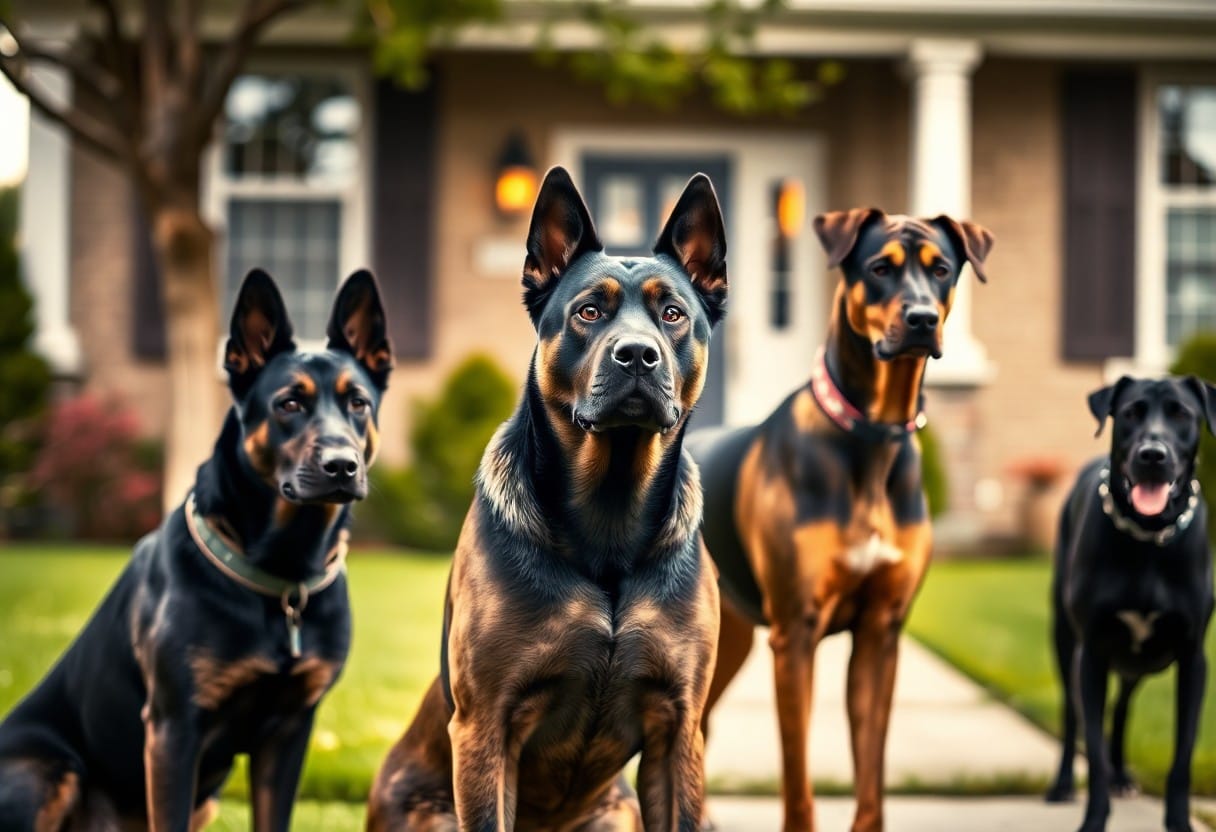

Many homeowners seek reliable protection, and choosing the right guard dog can significantly enhance your home’s security. You want a breed that is not only loyal and intelligent but also possesses strong protective instincts. Certain breeds are renowned for their alertness and ability to deter intruders, making them ideal companions for safeguarding your property. In this blog post, you’ll discover the best guard dog breeds that provide peace of mind while enriching your life with their affectionate nature and devotion to family.
Key Takeaways:
- Temperament: Choose breeds known for their protective instincts and loyalty, such as Rottweilers, German Shepherds, and Doberman Pinschers.
- Trainability: Select guard dog breeds that are easier to train and respond well to commands, ensuring effective protection and obedience.
- Space and Environment: Consider the living space you can provide, as larger breeds may need more room to thrive and patrol effectively.
Understanding Guard Dogs
Before choosing a guard dog, it’s imperative to grasp the fundamental aspects of what defines this unique canine role.
Definition of a Guard Dog
Understanding what a guard dog is can help you recognize its purpose. These dogs are specifically trained to protect property and individuals, displaying a protective instinct and alertness that sets them apart from typical pets.
Differences Between Guard Dogs and Other Types of Dogs
Before selecting a canine protector, it’s vital to know how guard dogs differ from other dog types. While many dogs can learn basic protection behaviors, guard dogs possess specific traits that enable them to fulfill their roles effectively, setting them apart.
| Guard Dogs | Other Dog Types |
| Highly trained for protection | General family pets |
| Strong territorial instincts | Less focused on protection |
| Instinctual response to threats | Geared towards companionship |
| Specialized training | Basic obedience training |
Dogs are pack animals, and their instinct to protect is deeply rooted in their nature. Guard dogs typically receive extensive training tailored to enhance their natural protective qualities, unlike family pets that may not have similar instincts. Understanding this can guide your choice in selecting the right canine for your home’s safety. Knowing the distinct features of each will enhance your ability to make an informed decision.
- Training is imperative for guard dogs.
- Behavior is influenced by breed characteristics.
- Socialization affects their protective capacity.
- Temperament distinguishes them in behavior.
- Knowing how dogs differ can impact your choice.
Importance of Breed Characteristics
One aspect of guard dogs you should consider is the significance of breed characteristics. Each breed comes with innate qualities that affect their ability to protect and serve effectively.
Guard dogs exhibit various breed characteristics that make them suitable for protection roles. Some breeds naturally display confidence, loyalty, and warning barks, imperative traits for a good guard dog. Choosing a breed with strong instincts can increase your home’s safety and improve your peace of mind. Guard dogs not only provide protection but also enhance your sense of security.
Top Guard Dog Breeds
If you are considering adding a guard dog to your family, there are several breeds that stand out for their protective instincts and loyalty.
German Shepherd
Breeds like the German Shepherd are renowned for their intelligence and versatility. As a natural protector, they excel in various roles, from police work to search and rescue. Their strong bond with their owners makes them reliable guardians for your home.
Rottweiler
Across the world, Rottweilers are recognized as powerful and devoted guard dogs. Their confident demeanor and protective nature make them an excellent choice for safeguarding your property.
In addition to their physical strength, Rottweilers are known for their loyalty and affectionate nature with their families. Given proper training and socialization, they can be both loving companions and formidable defenders of your home.
Doberman Pinscher
One of the most recognizable guard dog breeds is the Doberman Pinscher. Their sleek bodies and alert personalities make them excellent watchdogs, always on the lookout for any potential threats.
This breed is well-regarded for their intelligence and quick reaction times. With consistent training, Doberman Pinschers can become not only protective guardians but also obedient family members who easily adapt to your lifestyle.
Bullmastiff
Below the surface, the Bullmastiff is a gentle giant with a natural instinct to protect. Their imposing size alone can deter intruders, making them a preferred choice for guarding homes.
Plus, despite their formidable size, Bullmastiffs are known for their calm temperament and love for their families. They require minimal exercise compared to other breeds, which makes them suitable for families who want a loyal protector without a high energy requirement.
Belgian Malinois
Around the globe, the Belgian Malinois is increasingly popular as a working dog. Their agile bodies and keen sense of smell enable them to excel in various security roles, ensuring your home remains safe.
Hence, they are often favored by law enforcement and military for their intelligence and ability to perform complex tasks. With the right training, a Belgian Malinois can offer unparalleled loyalty and dedication in protecting you and your home.
Boxer
Belgian Boxers are not just playful companions; they are also effective guard dogs. Their enthusiasm and protective instincts make them vigilant watchdogs.
Further, Boxers are known for their bravery and energetic nature, which can be a perfect match for active families. Their strong bond with you ensures that they will always be alert, ready to defend you and your loved ones.
Great Pyrenees
For those looking for a guardian with a gentle demeanor, the Great Pyrenees is an excellent option. Their natural instincts make them effective protectors of homes and livestock alike.
Indeed, their massive size combined with a calm and patient personality makes them ideal guardians. Great Pyrenees are known for their independence and will often assess potential threats carefully before reacting, ensuring your home is secure while maintaining their tranquil nature.
Factors to Consider When Choosing a Guard Dog
Many factors play a significant role in selecting the right guard dog breed for your home. It’s imperative to assess your needs and environment thoroughly. Here are some key elements to consider:
- Size and strength of the dog
- Temperament and trainability of the breed
- Family dynamics and lifestyle
- Living environment suitability
Any of these factors can greatly influence the effectiveness of your chosen guard dog.
Size and Strength
Guard dogs should exhibit a strong physique that can effectively deter intruders. The size and strength of a dog can be an intimidating factor, making potential threats think twice before approaching. Larger breeds often possess the ability to protect and defend, but their size should also be manageable within your living space.
Temperament and Trainability
When dicking out a guard dog, consider its temperament and trainability. A stable and confident dog that is easily trainable will be more efficient in protecting your home. You want a breed that can discern between typical and suspicious behavior, allowing it to react appropriately under stressful situations.
Another important aspect of temperament and trainability is socialization. Well-socialized dogs are typically more adaptable to various environments and can differentiate between friendly guests and potential threats. Look for breeds known for their willingness to learn and obedience, ensuring that your guard dog can follow commands, which can be vital in emergencies.
Family Dynamics and Lifestyle
The nature of your family dynamics and lifestyle plays a pivotal role in the guard dog you choose. Dogs require socialization and interaction. Therefore, it’s necessary to select a breed that matches your family’s energy level and is good with children or other pets you may have.
Choosing a dog that aligns with your family dynamics ensures a harmonious living environment. A dog that doesn’t adjust well to your family’s lifestyle can become stressed or behave aggressively. Make sure to research breeds that are known to be friendly with kids or fit into your family structure seamlessly.
Living Environment
On another note, your living environment is imperative when picking a guard dog. You need to consider factors like the size of your yard, housing type, and leash laws in your area. Some breeds thrive in spacious homes with large yards, while others may be manageable in apartments with proper exercise routines.
To maximize your guard dog’s potential, ensure it has ample space to roam and play. A dog that can stretch its legs and engage in physical activity is likely to be happier and more effective in its guarding duties. A proper environment can also ease any behavioral challenges that might arise from confinement.
Training Your Guard Dog
Now, it’s imperative to focus on the training of your guard dog. Proper training not only helps in developing strong protective instincts but also ensures that your dog is well-behaved and responsive to commands. By implementing a structured training program, you can guide your dog to be a reliable protector for your home.
Basic Obedience Training
To start, you should focus on basic obedience training, which is the foundation for any effective guard dog. Teaching commands like “sit,” “stay,” and “come” establishes a clear line of communication between you and your dog, helping them understand what is expected. Consistent reinforcement through rewards will strengthen these behaviors.
Socialization Practices
Socialization is also an integral part of your training regimen. Exposing your dog to various environments, people, and other animals from a young age will help them become well-adjusted inside and outside your home. This experience is imperative for preventing anxiety and aggression, ensuring your dog can differentiate between a true threat and a friendly visitor.
In fact, early and ongoing socialization can greatly contribute to your dog’s overall confidence and comfort level. This exposure to diverse situations allows your guard dog to adapt and respond appropriately rather than react out of fear or uncertainty. Socialization must be continuous throughout their life, incorporating new experiences and challenges regularly.
Specialty Guard Dog Training
Against basic training, specialty guard dog training focuses on enhancing your dog’s protective abilities. By employing professional trainers or specialized programs, you can cultivate skills tailored to guarding your home, such as alertness to intruders or recognizing specific threats.
For instance, these programs often employ controlled scenarios where your dog learns to respond decisively. This training typically utilizes simulation exercises and role-playing, allowing your dog to practice skills in situations that mimic real-life threats, helping to solidify their protective instincts while maintaining discipline.
Ongoing Training and Maintenance
Beside initial training, ongoing training and maintenance are vital to your dog’s development. Regular practice sessions ensure that your dog retains learned skills and continues to improve on their abilities as a guard dog. Continuous engagement helps to maintain their focus and enthusiasm for their tasks.
Consequently, integrating training into your daily routine can reinforce good behavior and ensure that your dog is always prepared to protect your home effectively. Scheduled sessions, as well as casual practice during walks or playtime, will help your dog remain sharp and attentive to their responsibilities. Consistency in training fosters a strong bond of trust and respect between you and your guard dog, which is indispensable for a successful partnership.
The Role of Breed-Specific Legislation
Once again, the topic of breed-specific legislation (BSL) emerges in discussions about guard dogs and their role in protecting your home. This controversial regulation targets specific breeds deemed dangerous, impacting the landscape of dog ownership. Understanding the implications of these laws is imperative if you are considering a particular breed for your home protection needs.
Understanding Breed-Specific Laws
Between various regions, breed-specific laws vary significantly, with some areas outright banning certain breeds, while others impose restrictions on ownership. These laws often stem from concerns about public safety and are designed to mitigate risks associated with dog attacks, yet they may not consider each individual dog’s temperament or behavior.
Impact on Ownership Choices
Along with the differences in laws, the presence of breed-specific restrictions profoundly influences your choices when selecting a guard dog. You might find yourself drawn to breeds that are subject to bans or limitations, forcing you to reconsider which dog will be the best fit for your home.
At the same time, the restrictions can limit your options, steering you towards breeds that may not have the ideal protection traits you seek. You could feel pressured to adopt a less optimal breed purely to comply with these regulations, which may leave you feeling conflicted about your dog’s ability to safeguard your home effectively.
Controversy and Public Perception
By focusing on specific breeds, you may notice that the debate around breed-specific legislation often results in mixed feelings within your community. Some advocates argue that these laws reduce incidents of attacks, while opponents caution that they fail to address the underlying issues of dog training and ownership responsibilities.
Perception plays a significant role in shaping the ongoing debate. Public opinion can heavily influence legislation, leading to misconceptions about certain breeds’ propensity for aggression. This negative perception can unfairly vilify loving pets and prevent responsible owners from adopting breeds that, with the right training, could be well-mannered and protective companions.
Maintaining a Safe Environment
For ensuring the highest level of protection for your home, a comprehensive approach to safety is crucial. This includes not just the choice of the right guard dog but also integrating various security measures to create a well-rounded safety plan.
Dog Security Equipment and Gear
At the heart of any dog-focused security plan is the right security equipment and gear. Investing in durable muzzles, leashes, and harnesses can help you maintain control over your guard dog while allowing them to work effectively. Additionally, consider using well-marked signs to indicate a guard dog is present; this alone can deter potential intruders.
Home Security Systems
Security systems can be a significant addition to your home safety measures. A combination of alarm systems, surveillance cameras, and motion detectors enhances the effectiveness of your guard dog, creating a safer environment.
For instance, integrating a modern security system with your guard dog not only provides video footage of activities around your home but also alerts you to any unusual behavior. When the alarm is triggered, your dog can respond with vigilance, helping you respond promptly to any potential threats, thus offering a dual-layer of protection.
Integrating Guard Dogs with Other Safety Measures
Safety is about creating a multi-faceted approach to security that maximizes the strengths of your guard dog while complementing them with various safety measures. By using physical barriers like fences in conjunction with your dog’s natural protective instincts, you create a stronger defensive perimeter.
The combination of your guard dog’s alertness and other safety measures, such as reinforced locks and surveillance cameras, means intruders face multiple challenges before attempting any break-in. This synergy ensures that your home remains a fortress of safety for you and your loved ones, effectively dissuading any potential threats.
Final Words
Conclusively, selecting the best guard dog for your home not only provides a layer of protection but also offers companionship and loyalty. By understanding the characteristics and strengths of various breeds, you can choose one that aligns with your lifestyle and security needs. As you consider these breeds, think about your environment and how a guard dog can enhance your home security while becoming a beloved member of your family.
Q: What are some of the best guard dog breeds for home protection?
A: There are several dog breeds known for their protective instincts and ability to guard homes. Some of the best guard dog breeds include:
– German Shepherd: Renowned for their intelligence and loyalty, German Shepherds are often used in police and military roles due to their protective nature.
– Rottweiler: This breed is both strong and confident, making them excellent at guarding properties and families.
– Doberman Pinscher: Dobermans are known for their speed and agility, and they form strong bonds with their owners, making them vigilant protectors.
– Bullmastiff: With their massive size and strength, Bullmastiffs are natural guardians and are particularly known for their loyalty to families.
– Belgian Malinois: Similar to German Shepherds, they are intelligent and have a strong work ethic, often used in security roles.
These breeds can effectively protect homes when properly trained and socialized.
Q: How can I train my guard dog to effectively protect my home?
A: Training your guard dog requires a consistent approach focused on obedience, socialization, and protection training. Here are some steps to follow:
1. Obedience Training: Establish basic commands such as sit, stay, and come. This foundation helps your dog understand your commands and builds a rapport.
2. Socialization: Introduce your dog to different environments, people, and animals. A well-socialized dog can differentiate between normal situations and potential threats.
3. Protection Training: You may consider enrolling in a protection training program led by a professional trainer experienced in guard dog training. These programs teach specific skills that enable your dog to protect while remaining under control.
4. Positive Reinforcement: Use treats and praise to encourage positive behavior. Reward your dog when they display alertness or protective behavior toward strangers or unfamiliar situations while maintaining their obedience.
5. Ongoing Training: Regular practice keeps your dog’s skills sharp and reinforces their training. This can include drills and exercises that focus on guarding aspects.
With dedication and the right training, your guard dog can be a reliable protector of your home.
Q: What characteristics should I look for in a guard dog?
A: When opting for a guard dog, consider the following characteristics to ensure proper protection for your home:
– Temperament: Look for dogs that exhibit confidence without excessive aggression. A good guard dog should be calm, loyal, and protective without being overly reactive.
– Alertness: A guard dog must be aware of their surroundings and able to detect unusual activities. They should show signs of suspicion towards unfamiliar people or situations.
– Intelligence: Smart dogs can be trained effectively and are often better able to assess situations, leading them to react appropriately to perceived threats.
– Trainability: The ability to learn and respond to commands is important. Breeds that are eager to please tend to learn commands and tasks more easily.
– Physical Strength: A dog that is strong and agile will be better equipped to deter intruders. Consider medium to large breeds that possess solid build and endurance.
Overall, while breed traits are important, individual temperament and compatibility with your family are also important when selecting a guard dog.